


Dubai Shared Housing Law 2026: A Comprehensive Guide
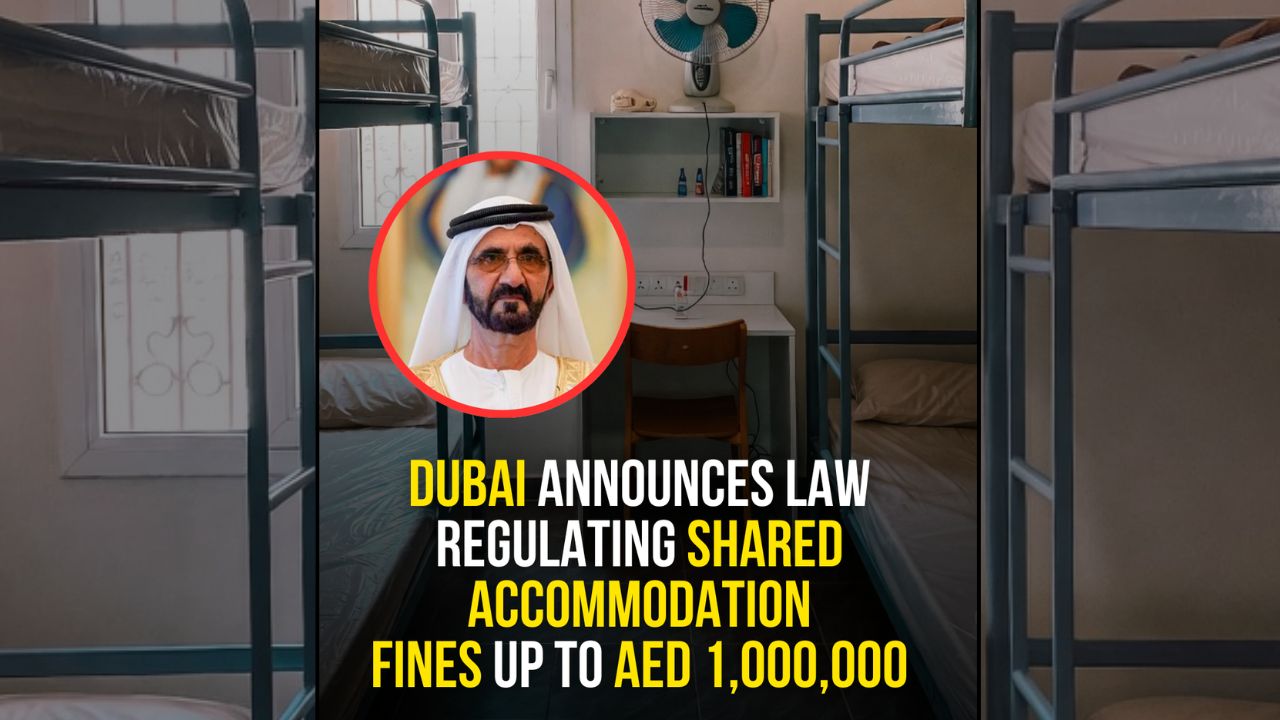
With the issuance of Law No. (4) of 2026 by His Highness Sheikh Mohammed bin Rashid Al Maktoum concerning the regulation of occupancy and management of shared housing in Dubai, the conditions for shared housing in Dubai have become clearer and more organized.
The Dubai Shared Housing Law aims to guarantee the rights of landlords and residents, provide a safe residential environment that complies with health and safety standards, and reduce overcrowding and informal housing.
The law mandates a Dubai Shared Housing Permit from Dubai Municipality for every property designated for shared housing.
It specifies six designated categories and six types of units permitted, in addition to 15 obligations for landlords and seven obligations for residents.
This law comes at a time when Dubai is experiencing rapid population growth, exceeding 4 million residents, with more than 1.38 million rental contracts registered, valued at AED 126.4 billion, by 2025.
Approximately 40% of the housing demand is driven by young professionals seeking affordable options such as shared housing.
Dubai’s shared housing law promotes social stability and the civilized appearance of the emirate, and is an essential guide for anyone looking for legal shared housing in Dubai or managing properties.
How will shared accommodation be regulated in Dubai?
Dubai Municipality will oversee shared accommodation. Under the new law, it will:
- Determine the maximum number of residents allowed in each housing unit
- Determine the minimum living space per resident
- Determine the shared facilities that must be provided
- Determine the areas where shared accommodation is permitted
Permits and Housing Requirements
Under the new law, no property can be used for shared accommodation without a permit from Dubai Municipality.
Residential units must meet standards related to occupancy limits, minimum area per resident, shared facilities, and building safety requirements before a permit is issued.
Tenancy agreements must include these details, along with the owner’s information.
Permits are typically valid for one year and can be renewed for similar periods. Property owners can also apply for a two-year permit.
Violations of the shared accommodation law may result in fines such as:
Fines range from AED 500 to AED 500,000, depending on the type of violation.
Fines are doubled for repeat offenses within one year and can reach up to AED 1 million.
You may be interested: Costs of Living in Dubai
Details of the Shared Housing Law in Dubai
The Dubai Shared Housing Law is based directly on the approval of the property owner, according to the Dubai Land Department.
Furthermore, according to Article 24 of Law No. 26 of 2007, the tenant may not assign the use of the property or sublet it to another party except with the written consent of the landlord (property owner).
Accordingly, if the tenant sublets the property without the owner’s knowledge, he may be required to vacate the premises along with all subtenants, whether the lease term has expired or not, according to Article 25 of Law No. 33 of 2008.
Dubai Shared Living Rules and Etiquette
- A subtenant has the right to continue renting the property until the original lease expires.
- The lease agreement details the relationship between the original tenant and the subtenant.
- Regardless of the relationship between the tenant and the subtenant, their obligations to the landlord (owner) remain as previously agreed.
- Ensure that you do not disturb others while living in a shared environment to avoid any legal issues.
Dubai Shared Housing Requirements 2026
The law aims to eliminate overcrowding and ensure the safety of residents by requiring official permits and applying strict technical and health standards to real estate units.
This regulation contributes to enhancing residential stability in Dubai, which is experiencing rapid population growth.
- Obtaining a mandatory permit from Dubai Municipality
- Specifying the maximum number of residents per unit
- Providing adequate space for each resident
- Meeting public health and safety requirements
- Displaying a clear sign containing the permit details
How to Obtain a Shared Accommodation Permit in Dubai?
A shared accommodation permit in Dubai has become mandatory under the new law.
Issued by Dubai Municipality for a renewable one-year period, the permit requires the unit to meet all technical, environmental, and safety requirements before approval.
This permit serves as the official guarantee for operating the unit legally and avoiding penalties.
- Submit the application through Dubai Municipality’s digital platform
- Submit ownership documents and the lease agreement
- Ensure the unit meets safety standards
- Pay any applicable fees
- Renew the permit at least 30 days before its expiry
Penalties and Fines under Dubai’s Shared Housing Law
The shared housing law imposes severe penalties of up to AED 1 million for violators, in addition to the possibility of suspending operations, canceling permits, and cutting off services to the offending unit.
These penalties aim to deter violations and ensure strict enforcement of the law.
- Fines of up to AED 1,000,000
- Suspension of operations for up to 6 months
- Cancellation of permits
- Eviction of the property unit
- Cutting off public utilities (electricity and water)
You may be interested: Housing and Rental Guide in Marina crown


